
Setting Up a Safe Feeding Station for Large-Breed Puppies

Raising a large-breed puppy is one of life’s greatest adventures. Zoomies across the living room, cuddles on the couch, and endless curiosity make every day memorable. But puppy parenthood comes with responsibilities: nutrition, hydration, joint support, and how your puppy eats all play a huge role in shaping a strong, healthy adult dog.
Many puppy parents focus on what’s in the bowl, but how and where your puppy eats and drinks is just as important. This guide walks you through safe feeding practices, hydration tips, and the best products to make mealtime healthier and more convenient. We’ve also added some Amazon links to recommended products for easy access.
Floor-Level Bowls Are the Safest Choice
For most large-breed puppies, floor-level bowls are the safest option, at least until your pup is older and you’ve assessed individual risk factors such as breed, chest shape, and eating habits.
While elevated bowls may help posture for adult dogs, research shows that for deep-chested or giant breeds, the risks outweigh the benefits. Bloat (Gastric Dilatation-Volvulus, or GDV) is a serious, life-threatening condition, and feeding practices play a key role in reducing this risk.
High-Risk Breeds include:
- Great Danes
- Dobermans
- Weimaraners
- Irish Wolfhounds
- Saint Bernards
- Standard Poodles
Even if your puppy isn’t one of the high-risk breeds, all large-breed pups benefit from smart feeding habits. Floor-level bowls, slow-feeder designs, multiple small meals, and careful portion control make mealtime safer, more comfortable, and less stressful. They help support healthy digestion, steady growth, and strong joints.
Why Slow-Feeder Bowls Are Essential
Slow-feeder bowls are highly recommended for large-breed puppies. By slowing down mealtime, slow-feeder bowls make eating safer, healthier, and more enjoyable for your growing puppy. They help:
- Encourage calmer, more deliberate eating
- Reduce air gulping and bloating
- Support healthy digestion and nutrient absorption
- Promote portion control and reduce overeating
- Minimize choking hazards
Setting Up a Puppy-Friendly Feeding Station
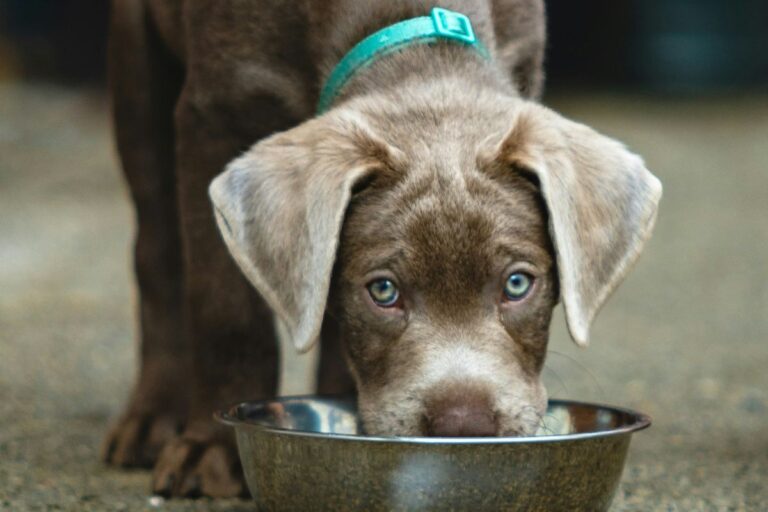
Creating a proper feeding station is one of the easiest ways to support your large-breed puppy’s health and comfort during mealtime. Start with a floor-level slow-feeder bowl, which helps reduce the risk of bloat and encourages slower, more deliberate eating. Offer small, frequent meals—typically three to four times per day during periods of rapid growth—to provide consistent nutrition without overloading their digestive system. Finally, place the bowls on a stable feeding mat or tray to keep everything in place, protect your floors from spills, and make mealtime cleaner and more manageable for both you and your puppy.
Recommended SLOW FEEDER options:
The Outward Hound Medium Slow Feeder Bowl is perfect for puppies who eat too quickly. Its puzzle maze design encourages slower, more mindful eating, which helps prevent bloat, aids digestion, and reduces gulping. It holds up to 2 cups of wet or dry food, features a non-slip base, and is made without BPA for safety. Plus, it comes in vibrant purple or turquoise, making mealtime both fun and practical.
The Neater Pet Brands Stainless Steel Slow Feed Dog Bowl is designed for fast-eating large-breed puppies over 40 lbs. Its durable metal construction and slow-feed design help reduce gulping, support digestion, and prevent bloat. With a 3-cup capacity, it fits perfectly in large Neater Feeders and is ideal for growing puppies or full-grown dogs who need a controlled, safe feeding experience.
Recommended FEEDING MAT:
The Waterproof Reopet Feeding Mat with High Raised Edges is perfect for messy eaters and drinkers. Its heavier, thicker design keeps bowls stable and prevents spills from reaching your floors, while the high raised edges contain mess effectively. Made from BPA-free, durable material, it’s safe for puppies and easy to clean.
The Importance of Hydration for Large-Breed Puppies
Proper hydration is essential for growing puppies, especially large-breed pups whose joints, digestion, and organs are developing rapidly.
- Wet (canned) food contains 65–80% moisture, significantly contributing to hydration
- Dry kibble contains only 8–12% moisture, which is usually insufficient, so adding a little water to their food can help support hydration and digestion.
As a general guideline, puppies need about 40–60 mL of water per kilogram of body weight per day, depending on activity, diet, and temperature. For example, a 20 kg large-breed puppy would need roughly 0.8–1.2 liters of water daily. Providing constant access to fresh, clean water is essential to keep your puppy healthy and growing strong.
Recommended SPILL-PROOF BOWL:
A Loving Pets Spill Proof Dog Bowl is especially useful for big-pawed, energetic pups. These bowls prevent tipping and reduce the constant puddles that form around standard bowls. More importantly, they help ensure your puppy always has access to clean water. Proper hydration supports joint function, digestion, temperature regulation, and healthy organ development — all crucial for large-breed puppies that grow quickly.
Bringing It All Together
Proper nutrition and hydration for a large-breed puppy go hand in hand with how they eat and drink. By pairing:
- Floor-level slow-feeder bowls
- Stable feeding mats
- Multiple small meals per day
- Fresh, accessible water
…you create a safe, healthy, and convenient mealtime routine. Paying attention to posture, eating pace, and hydration sets your puppy up for a long, happy, and healthy life. For a complete breakdown of what nutrients your large-breed puppy needs to grow strong and healthy, check out our LARGE-BREED PUPPY NUTRITION GUIDE.
If you want to learn more about SUPPORTING JOINT HEALTH in large-breed puppies, read about must-have supplements here.
Some links help to support our site at no extra cost to you. Thanks for helping us share more pet love! ❤️